Empowerment through Student-Led IEP Meetings
Featured Guest Blogger: Dr. Ritzie Gratrix of Sped Transition Tools.
We all know that IEP meetings can be challenging– whether it’s scheduling, writing, or the entire meeting altogether. I have sat through hundreds or even millions (slight exaggeration) of these meetings and they all seem to be the same. Students are rarely participating, and it is almost always just a conversation between the special education teacher and the family. The families felt that there were usually only minor changes and their student was just going “through the motions” of school. I didn’t like that. The students did great things in the classroom and I wanted to show it off.
It wasn’t until a couple of years ago, I started involving my students with the development of their IEP. I still had to write the very boring, legal document—I couldn’t avoid that, unfortunately.
From my experience, a student-led IEP meeting is refreshing, engaging, and a positive experience for all members of the team (yes, including the students).
Where to begin:
I’m not going to lie. I’ve written an IEP in a day. But this takes time and preparation. Typically, I would start a few weeks in before I send the draft home. I use interest inventories to find topics to talk about. As a secondary teacher, I really wanted to focus on transition planning.
Statement of Strengths & Preferences
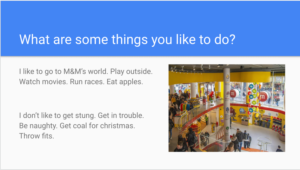
I started with questions that were engaging. I asked questions that could get to know them. As you can see here, my student was ready to talk about all of his favorite things. I also liked that we talked about things he didn’t like. That is just as important.
Career Goals
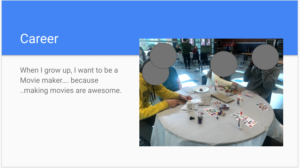
Think about how cool it is for a student to read this slide to their family (and the entire IEP team).
Goals & Benchmarks
Have you ever made a SMART goal?
This could help introduce that concept to students. They can help plan the steps on how to achieve their goals.
Incorporate Technology:
I found that it was easier to use Powerpoint or Google Slide. I made a template that I used with all of my students. Each slide asked one question and the students provided their answer and were able to decorate the slide in any way they wanted. I think this was the best part!
If your students are not able to use either of these programs, you can provide choices to help them design each slide. I am always surprised at how quick our students can figure out how to use anything technology.
Evidence:
I took a lot of pictures and I have pictures of students working in the classroom, working off-campus, and when they were socializing with their peers. I also took pictures of them cooking in the classroom and even some of their work samples. We send work samples home, but it is always a proud moment to relive those achievements. I loved incorporating these in the presentations.
Non-technology options:
If technology isn’t available, you can simply print out the slides and the students can write or draw whatever they please. I have also seen students prepare collages using pictures and magazine clippings. How cute is that? The students can talk about why they chose specific pictures.
Practice, practice, practice:
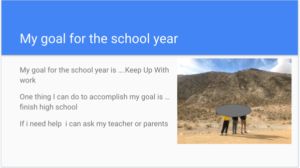
Once the presentation was complete, we practiced! There were times, my students would read directly from the slides. I didn’t mind this at all. Other options included programming their assistive technology devices prior to the meeting. I was very surprised at how quickly my students learned their “lines” and were able to present in front of the IEP team.
These are just a few suggestions that have worked for me and I am sure there are ways to adjust and differentiate on many levels. I wish I could explain how proud and empowered my students were when they were leading the meeting. The meeting became more meaningful to the family as well. There was such a dynamic shift in their attitudes and overall interest in their IEP.

Check out my Sped Transition Tools YouTube Channel
You might also enjoy reading:

Dr. Ritzie Gratix was my professor for one of my autism classes! I love her and her ideas. It is awesome to see two brilliant people in one place. I love your info.